SCIENCE ADVANCES
Septins provide microenvironment sensing and cortical actomyosin partitioning in motile amoeboid T lymphocytes
How septin-associated cortical rings help T cells navigate a 3D matrix.
THE TABDANOV LAB PENN STATE COLLEGE OF MEDICINE
Exploring the physical intelligence of living cells.
From the forces within to the tissues they navigate.
THE BIG QUESTION
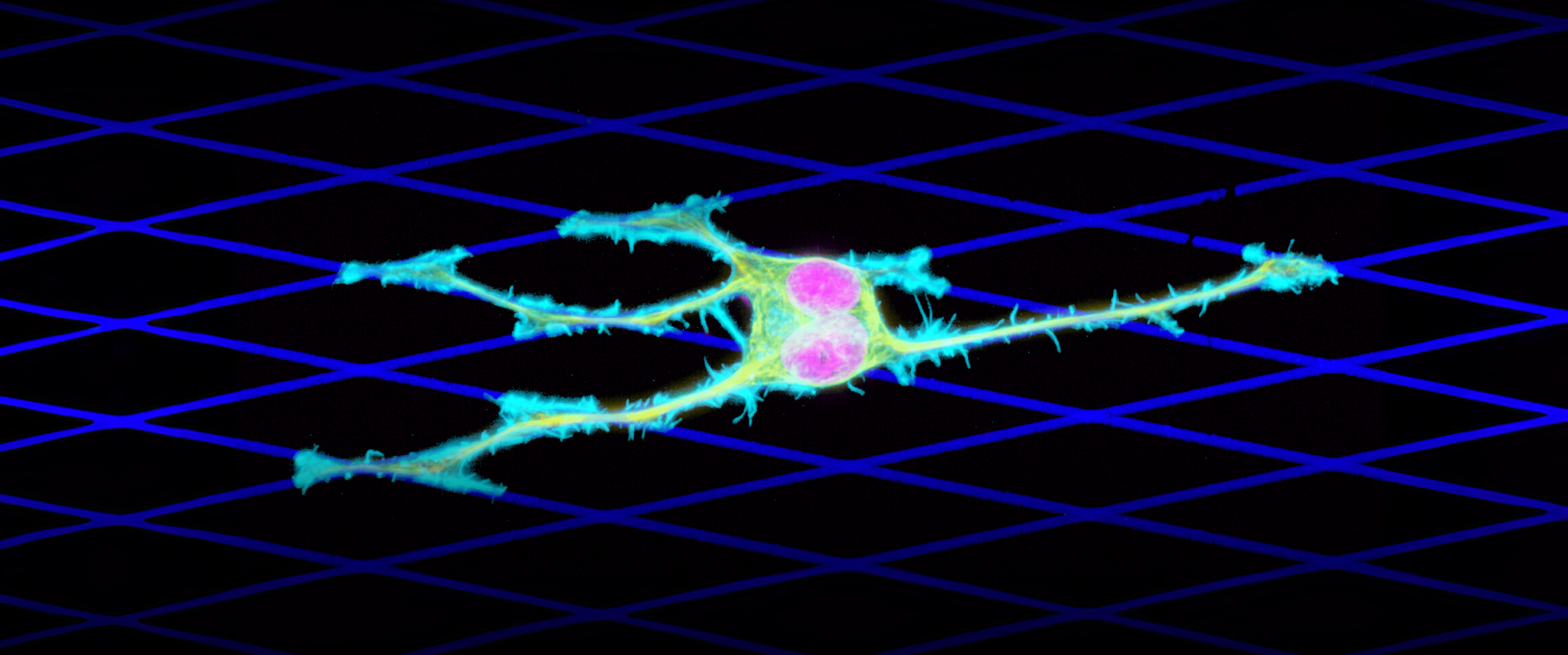
A cell encounters tight spaces, changing surfaces, and physical obstacles. It responds by reorganizing its shape and the machinery inside it.
We bring cell biology and physics together to understand this adaptability. Our work connects cytoskeletal architecture, force generation, and nuclear mechanics to the movement of immune and cancer cells.
OUR RESEARCH
IMMUNE CELLS & COMPLEX TISSUES
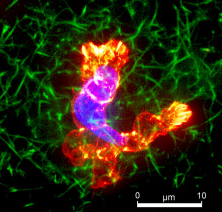
Immune cells squeeze through intricate tissue environments to reach their targets. We investigate how physical confinement, adhesion, and the mechanics of the nucleus shape their paths.
Can understanding how T cells move help us improve their access to solid tumors?
Explore the published work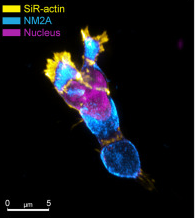
DYNEIN, MICROTUBULES & ACTOMYOSIN
Cells draw on interconnected systems to generate and transmit force. We study how microtubules and dynein motors work alongside actomyosin to support migration and contact guidance.
How does a cell redistribute force when its environment changes?
Explore the published work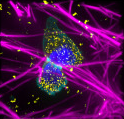
SEPTINS & MECHANICAL ADAPTABILITY
Septins help organize the cell cortex as a cell encounters its surroundings. We investigate how cytoskeletal architecture links local geometry to whole-cell mechanical behavior.
How can the organization of a few structural components expand a cell’s repertoire of movement?
Explore the published workWatch living cells navigate.
Ask what makes movement possible.
Connect molecules to cell behavior.
FUNDAMENTAL QUESTIONS. MEDICAL RELEVANCE.
The same physical barriers that hinder immune cells can shape how cancer cells invade.
By uncovering the principles of cell navigation, we aim to reveal opportunities to improve immune-cell access to tumors and understand metastatic migration.
The science behind the questionsSELECTED PUBLICATIONS
SCIENCE ADVANCES
How septin-associated cortical rings help T cells navigate a 3D matrix.
ADVANCED SCIENCE
A complementary force-generating system for invasive cancer-cell migration.
NATURE COMMUNICATIONS
Connecting the mechanics of T-cell migration to the challenge of tumor access.
PEOPLE & CULTURE
We value original thinking, constructive disagreement, and the freedom to follow evidence. Our approach brings different disciplines into the same conversation, with the goal of developing confident, independent researchers.
Start a conversationLET’S CONNECT
Have a question, a different perspective,
or an idea to explore together?
Penn State College of Medicine
Hershey, Pennsylvania